Saltar al contenido principal
One of the wonderful things about sailing is how forgiving it is. You can participate at any exertion level: casual cruiser or hot racer. But during a course, you will do more drills and maneuvers in a short period of time than you would during a normal sailing outing. Chances are, you’ll discover a few new muscles and experience a different kind of fatigue at the end of each day. And you might feel like Deborah Loeff, a pediatric surgeon in Chicago who bought her own boat after her first lesson. “I loved it,” she exclaimed. “Very athletic and mentally challenging.”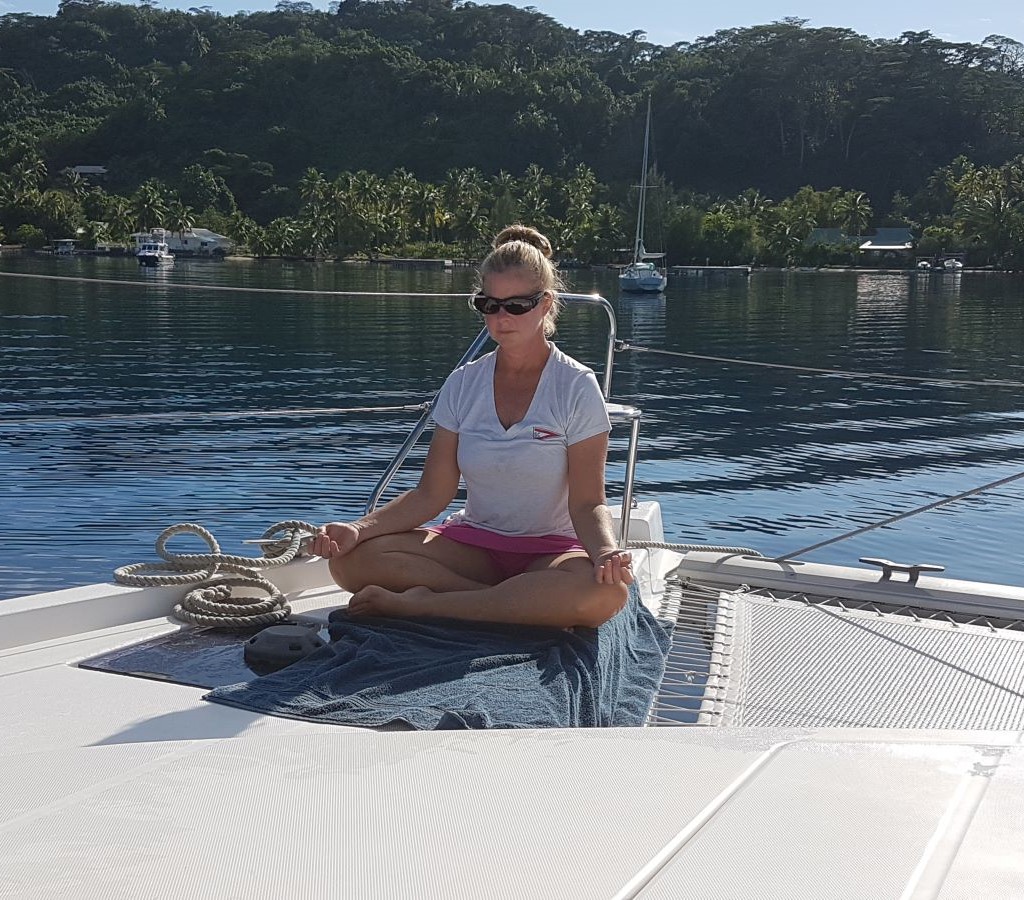
If you’re overweight and out of shape, don’t let this hold you back. Es posible que se quede sin aliento tirando líneas, and you might feel clumsy getting around the boat at first. But the fact is, it won’t hinder your ability to learn to sail. (Sin embargo, you might want to think about starting a fitness program when you get home.) Certified instructors are trained to watch for signs of weariness and give you easier jobs or let you rest.
Sailors who race on a regular basis put their bodies through more extremes than casual sailors do, so they need more physical preparation. La 1995 all-women America’s Cup team was up at 5 A.M. running, bench pressing, and developing muscles that matched those of the male team members on other boats. But that’s the extreme.
Women who sail regularly generally emphasize working on upper-body strength and toning exercises for sailing. To compensate for small size or too little strength, Stephanie Argyris recommends learning to use your whole body — your trunk and hips, not just your arms, especialmente cuando tirando de las líneas y el uso de tornos cuando se toma una de nuestras cursos de vela de EE.UU. at Offshore Sailing School.
Toning your body
While researching this book, I was surprised to find that few women thought about sailing workouts before taking a sailing course. Maybe that’s because fitness is so much a part of our daily lives. If you don’t have a regular exercise regime, I suggest you do a little preparation each day to keep the minor aches at bay. These exercises for sailing can be done wherever you are, at home, on the road, in the gym. Pero, they might not be for everyone. Check with your doctor, physical therapist or trainer. Get a copy of Fitness Afloat, a video developed for sailors. Comience poco a poco si no ha hecho ejercicio durante un tiempo y siga estos pasos al comenzar el entrenamiento para la navegación.
Agility and suppleness. Limber up before you go out. Bicycle 5 miles at a good, steady pace on a nice cool morning; use a stationary bike in the gym or at home; do a 10-minute fast walk. Stretch each morning to avoid a pulled muscle or soreness at the end of the day. The following sailing workouts should be done in slow rhythmic repetitions, not sporadic pulsing, always with a flat back and tight stomach and buttocks. Take deep breaths throughout.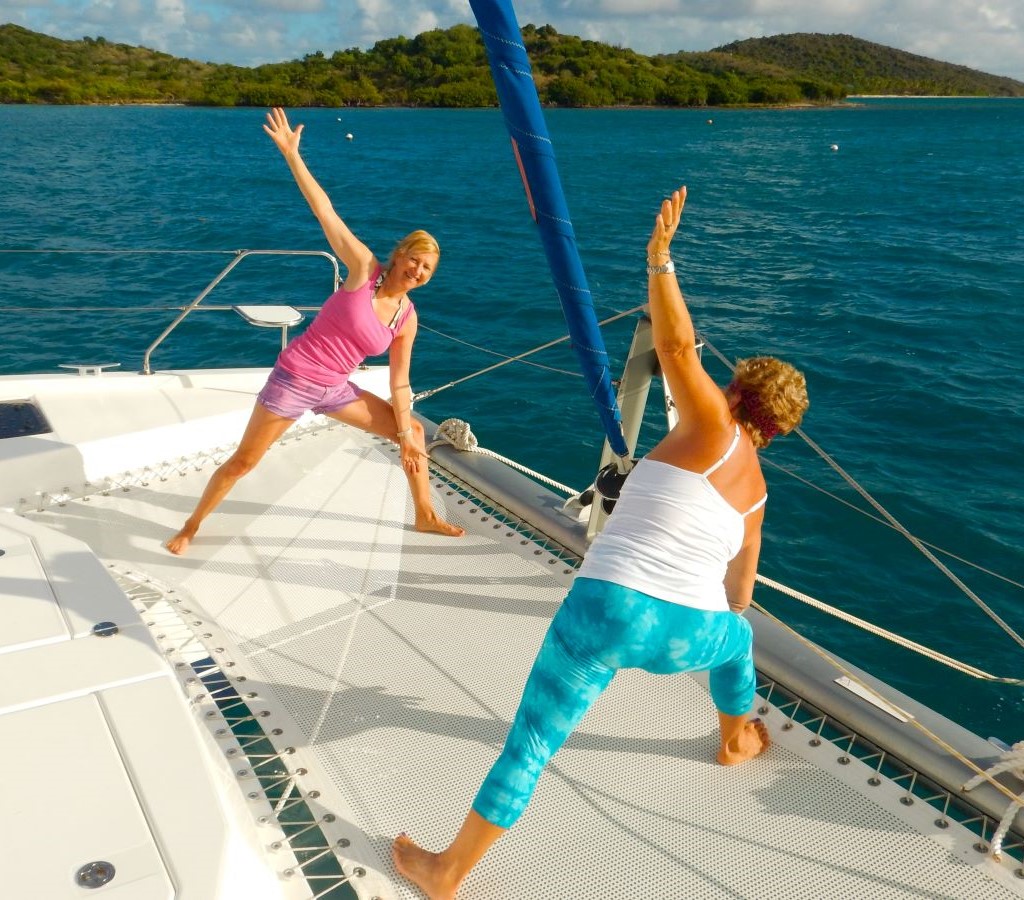
- While sitting on the floor with legs wide apart in front, bend as far forward as you can.
- Still on the floor with legs still apart; twist, then stretch low over the right leg, then the left.
- Standing with feet shoulder-width apart, reach as high as you can, over and over.
- Standing, with arms straight out to your sides, twist at your waist as far as you can to one side, then the other.
- With your right arm over your head, your left hand on your hip, lean as far to left as you can. Then reverse.
- Relax your neck and lower shoulders. Keep your hands relaxed at your sides. Now rotate your head slowly down, to the right, to the back, around to the left, and to the front. Reverse and repeat.
Strengthen stomach muscles to avoid back stress. The number of repetitions depends on your stamina. Start with eight of each and build up from there. Keep your back flat on the floor, knees bent, lower legs parallel to floor, stomach muscles and buttocks tight. Alternate flexed ankles with pointed toes to work the muscles in your lower legs.
- Put your hands behind your head, with elbows straight out to the sides, and lift your head up.
- Put your hands behind your head, with elbows straight out to the sides, and lift your upper body, then lower it.
- For these abdominal curls, put your arms straight out behind your head. Raise your upper body and your knees to your chest. Simultaneously bring your arms straight forward, outside your knees.
- For these elbow-to-knee abdominal curls, keep your feet off floor, your arms behind your head with elbows straight out to sides. Curl forward and bring your left elbow to right knee, then right elbow to left knee.
Arms and upper body. When you do standing exercises for sailing, remember to keep your back and shoulders in line, buttocks tucked in,and stomach muscles tight. Legs should not be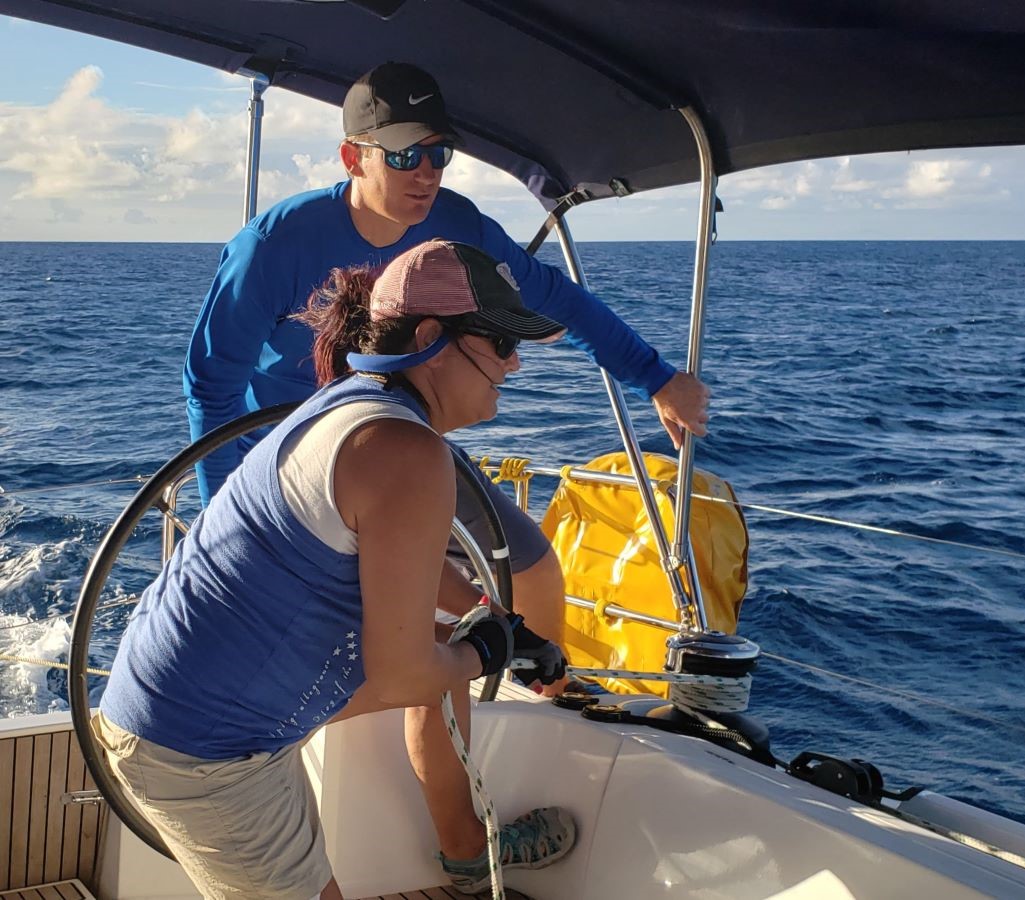 more than shoulder-width apart.
- In a standing position, with legs shoulder-width apart, hold your upper arms against body, clench your fists, and raise your lower arms up and down from a fully extended position to as tightly bent an elbow as possible.
- Lean forward from your waist with your back flat. Bring your arms tight to your sides and bend your elbows so your lower arms are tight against your upper arms. Tighten your arm muscles, extend your lower arms back, then forward again to closed elbow position.
- Repeat. Try this with small weights in your hands too.
- Squeeze a tennis ball in each hand repetitively.
- Using small weights or soup cans, extend your arms and roll your wrists.
Upper body and chest muscles. Holding small weights or soup cans will augment these sailing workout exercises. Always keep your back straight, and your stomach and buttock muscles tight.
- With your arms straight out to your sides, at shoulder height, bend your elbows and keep your lower arms straight, so your arms make an L-shape. Bring your arms across chest until your hands and forearms meet. Return to your starting position. Repeat.
- With your arms straight out to your sides at shoulder height, palms open and facing down, bring your arms across your chest and each other fully extended; pulse two times. Stretch arms back to starting position fully extended; turn palms away and pulse two times back as if you were pushing against a wall. Repeat.
Leg muscles. Remember: For all the leg sailing workout exercises, keep your buttocks tight (you get a little boost in shaping that area too), back straight, and stomach muscles tensed.
- On the floor on your back, raise your buttocks and legs straight up.
- Support your lower back with your hands. Pump your legs fast, as if bicycling; alternate pointed toe and flexed ankles.
- Standing facing a chair, door, or rail, hold onto the chair back, door knob, or rail with both hands. Raise your outside leg in front of you, with thigh as close to a right angle with the floor as possible, your knee bent, and your leg hanging straight down. Keeping this position, open your hip, and move your leg as far to your side as possible without twisting at the waist. Holding this position, extend your lower leg straight out, then bring it back to a bent position. Alternate pointed toes and flexed foot. Repeat. Change sides and work your other leg.
- Facing a chair back or a rail, hold on with both hands, tighten your legs, raise yourself up on your toes, and lower yourself down several times.
Exercises aboard
Diana Smith, an avid racer and NWSA founding member, carries a 6-foot length of ¾ inch surgical tubing wherever she goes. On a boat, she hangs it over the boom or over handholds in the cabin below and pulls against it to strengthen her shoulders and upper back. For a simulated pectoral machine, she wraps it around a vertical post and sits with her back to the post, pulling the ends to the front. To simulate a rowing machine, she sits with feet extended and wraps the tubing around her soles.
Women who cruise over long distances find their bodies become sinewy and strong. They tend to eat less and consume healthier food. With no real deadlines, stress levels fade away; you feel younger and better. There are all kinds of exercises for sailing you can do when cruising, using various parts of the boat — the boom and handholds for stretching; bungee cords, winch handles, halyards and lines for upper body; foredeck surface and cockpit seats for leg work and abdominals. Cans of food work well as weights. The day-to-day activity of cruising is a workout in itself. You tense and relax muscles as you balance against the boat’s movements, bend and pull on lines, row dinghies, and swim.
Reprinted from “Sailing – A Woman’s Guide” By Doris Colgate Published by Ragged Mountain Press
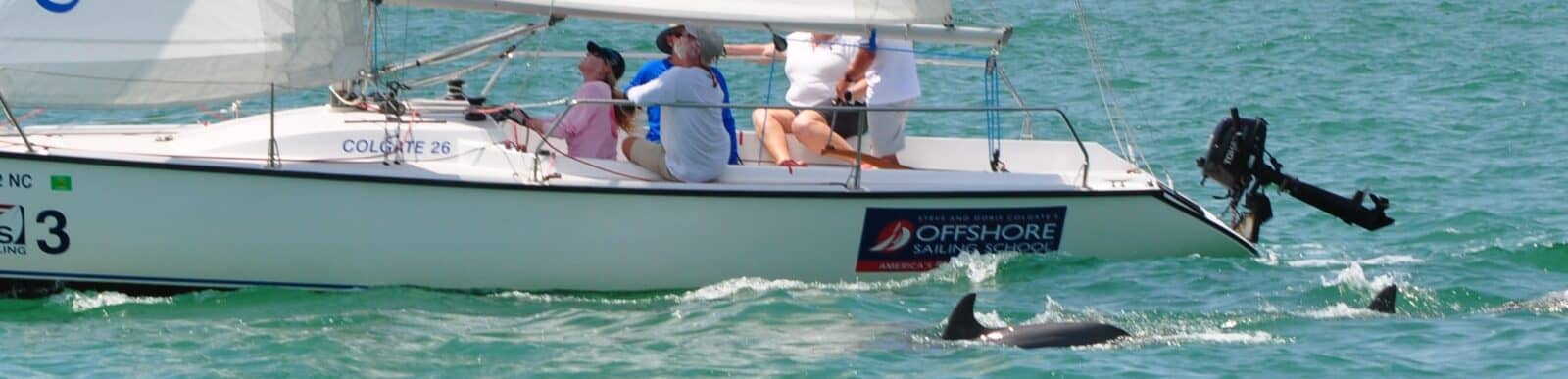
La navegación es un deporte dinámico que puede exigir una combinación única de fuerza, flexibilidad, resistencia, y agudeza mental.
Incorporating a structured sailing workout regimen into your routine can significantly improve your abilities and overall enjoyment of the sport.
The Importance of Physical Fitness in Sailing
En Marino Escuela de Vela, we emphasize that physical fitness is a key component of becoming a skilled and confident sailor. Whether you’re handling sails, balancing on a heeling deck, or enduring long hours at the helm, sailing challenges various muscle groups and cardiovascular endurance. A well-rounded fitness program tailored to sailing can lead to:
- Fuerza muscular mejorada: Esencial para tareas como recortar velas y equipos de maniobra.
- Flexibilidad mejorada: Ayudas en un movimiento eficiente alrededor del recipiente, reduciendo el riesgo de lesiones.
- Aumento de la resistencia: Vital para mantener el enfoque y el rendimiento durante los períodos prolongados en el agua.
- Mejor equilibrio y coordinación: Crucial para la estabilidad en un bote en movimiento, especialmente en condiciones difíciles.
Centrándose en estas áreas, Los marineros pueden asegurarse de que estén físicamente preparados para satisfacer las demandas de la navegación cuando se encuentran fuertes vientos y mares agitados..
Ejercicios esenciales para navegar
Para desarrollar los atributos físicos necesarios, Considere integrar lo siguiente ejercicios de navegación en tu rutina de acondicionamiento físico:
1. Fortalecimiento del núcleo
Un núcleo fuerte es fundamental para mantener el equilibrio y ejecutar movimientos de manera eficiente en un recipiente de navegación.
- Tablones: Mantenga una posición de tablón para 30-60 artículos de segunda clase, Involucrar los músculos abdominales.
- Giros rusos: Siéntate en el piso con rodillas dobladas, inclinarse ligeramente, y gire el torso de lado a lado mientras sostiene un peso.
- Elevaciones de la pierna: Acuéstate boca arriba y levanta las piernas a un ángulo de 90 grados, Luego, bájelos lentamente sin tocar el suelo.
La incorporación de estos ejercicios mejora la estabilidad y el control durante varias maniobras de navegación.
2. Acondicionamiento de la parte superior del cuerpo
Fortalecer la parte superior del cuerpo es crucial para tareas como la elevación de las velas y la dirección.
- Pull-ups: Desarrolle los músculos de la espalda y el hombro esenciales para extraer acciones.
- Lagartijas: Apuntar al cofre, espalda, y tríceps, promoviendo la fuerza de empuje.
- Filas de mancuernas: Concéntrese en la parte superior de la espalda, Mejora de la postura y el poder de tracción.
El entrenamiento regular de la parte superior del cuerpo asegura que pueda manejar las demandas físicas de la navegación con facilidad.
3. Entrenamiento cardiovascular
La resistencia es clave durante largos días en el agua.
- Correr o trotar: Mejora la salud cardiovascular y la fuerza de las piernas.
- Ciclismo: Proporciona una alternativa de bajo impacto para mejorar la resistencia.
- Natación: Combina cardio con acondicionamiento de cuerpo completo, imitando el entorno acuático.
Participar en actividades cardiovasculares prepara su cuerpo para el esfuerzo sostenido requerido durante las excursiones de navegación.
4. Flexibilidad y equilibrio
La flexibilidad y el equilibrio son vitales para moverse de manera eficiente y segura en un bote.
- Yoga: Combina el estiramiento con posturas de equilibrio, Mejora de la flexibilidad general.
- Ejercicios de la junta de equilibrio: Imita la superficie inestable de un bote, Mejora de la propiocepción.
- Estiramiento dinámico: Incorpore movimientos que estiren los músculos a través de su rango completo de movimiento.
These practices help prevent injuries and improve your ability to adapt to the boat’s movements.
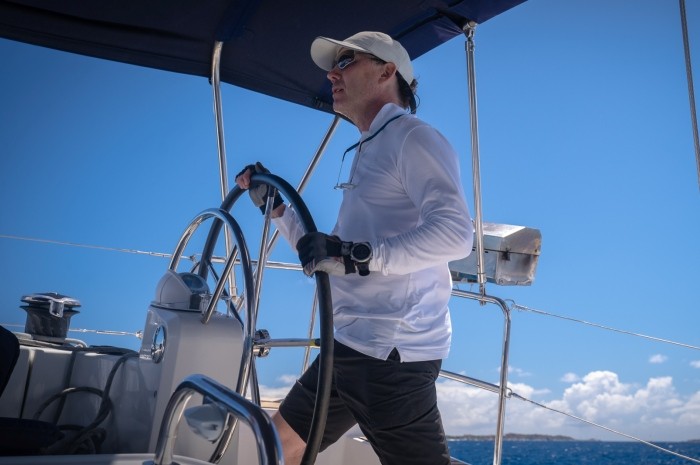 Strength Training for Sailing Performance
Building muscular strength through strength training exercises is vital for sailors. Incorporating strength gains into your routine enhances endurance and prevents fatigue during long sailing trips.
Key Strength Training Exercises for Sailors
To develop upper body strength, core strength, and lower body endurance, include the following:
- Pull-ups and Chin-ups: Improve arm strength y agarrar para manejar velas y aparejos.
- Peso muerto: Mejorar la potencia del cuerpo total, especialmente útil para levantar equipos pesados.
- Tablones y giros rusos: Fortalecer músculos centrales Para el equilibrio y el control.
- Estocadas y sentadillas: Desarrollar músculos de la pierna para estabilidad y agilidad en la cubierta.
- Carrera del agricultor: Incremento fuerza de agarre e imitadores que transportan equipo pesado en un bote.
Siguiendo constantemente un entrenamiento de fuerza régimen, Los marineros pueden desarrollar resistencia y resistencia, reducir el riesgo de lesiones y mejorar el rendimiento de marineros en varias condiciones.
Entrenamiento de agua para la fitness de navegación
Para complementar ejercicios de navegación, incorporación entrenamiento de agua agrega un elemento realista a los regímenes de fitness. Este tipo de entrenamiento mejora la coordinación, resistencia, y adaptabilidad a las condiciones de cambio en el agua.
Ejercicios de entrenamiento de agua efectivos
- Pisar agua: Mejora core strength y resistencia durante largas horas de navegación.
- Ejercicios de natación: Se desarrolla ejercicio cardiovascular Capacidad para tareas de alta energía.
- Ejercicios de la junta de equilibrio sobre el agua: Mejora la estabilidad, simulando movimientos de cubierta.
- Kayak o remo: Fortalecer upper body strength y mejora fuerza de agarre.
Regular entrenamiento de agua prepara a los marineros para condiciones del mundo real, Ayudándoles a adaptarse a las demandas físicas de diferentes entornos de navegación.
Comience su programa de capacitación de navegación hoy!
Mejor Fitness de navegación a través de un estructurado Entrenamiento para navegar El programa mejora tanto la seguridad como el rendimiento en el agua. Integrando ejercicios centrales, entrenamiento de fuerza, ejercicio cardiovascular, y ejercicios de práctica de navegación, Los marineros pueden desarrollar la fuerza, resistencia, y la agilidad necesaria para una experiencia de navegación excepcional.
Listo para elevar sus habilidades de navegación? Ofertas de la escuela de navegación en alta mar hands-on sailing courses at locations en Florida y las Islas Vírgenes Británicas. Join our sailing programs today to combine technical training with real-world práctica de vela and become a confident, well-prepared sailor!
Preguntas frecuentes
Why is strength training important for sailing?
Strength training is essential for sailors because it enhances muscular strength, resistencia, and stability on the water. Sailing requires a combination of upper body strength for handling sails, grip strength for rope work, and leg muscles for balance on an unstable deck. Los ejercicios de entrenamiento de fuerza regular mejoran el rendimiento, reducir la fatiga, y prevenir lesiones, hacer que la navegación sea más eficiente y agradable.
¿Cuáles son los mejores ejercicios de navegación para mejorar la fuerza central??
Desarrollar la fuerza central es crucial para mantener el equilibrio y la estabilidad mientras se navega. Algunos de los ejercicios centrales más efectivos incluyen:
- Tablones: Fortalecer todo el núcleo para una mejor postura y resistencia.
- Giros rusos: Mejorar la fuerza de rotación necesaria para maniobrar velas.
- Elevaciones de la pierna: Ayuda con la flexibilidad y la resistencia abdominal inferior.
- Tomos muertos y transporte de agricultores: Construir fuerza de cuerpo completo mientras mejora la fuerza de agarre.
Incorporarlos en un entrenamiento de navegación asegura que los marineros puedan manejar aguas ásperas con un mejor control.
¿Cómo se beneficia el ejercicio cardiovascular el rendimiento de la navegación??
El ejercicio cardiovascular juega un papel clave en el entrenamiento para la navegación, A medida que aumenta la resistencia y la resistencia, permitiendo que los marineros funcionen durante períodos prolongados sin fatiga. Actividades como:
- Correr o ciclismo: Mejorar la salud del corazón y la resistencia de las piernas.
- Natación: Imita los movimientos utilizados en el entrenamiento del agua, Fortalecer los músculos de la parte superior del cuerpo inferior.
- Remo o kayak: Construye resistencia mientras se dirige a la fuerza de la parte superior del cuerpo.
Un régimen de fitness bien equilibrado con ejercicio cardiovascular asegura que los marineros tengan la energía y la resistencia durante largas horas en el mar.